Over the past few years, one of the most interesting shifts in retail has not been about products.
It has been about experience.
Consumers today are no longer simply buying items. They are buying identity, belonging, aspiration and emotional connection.
Few brands demonstrate this more effectively than ALO Yoga.
At first glance, ALO appears to be an activewear company. Premium leggings, elevated basics and wellness-inspired fashion sit at the heart of the brand.
But the real reason ALO has become one of the most culturally influential wellness brands in the world is not simply because of what it sells.
It is because of how people experience the brand.
That strategy is clearly translating commercially.
The brand surpassed $1 billion in sales and has rapidly expanded its physical footprint globally, with ambitions to open around 100 additional stores internationally.
Importantly, this growth has not been built through traditional discount-led retail tactics.
It has been built through lifestyle positioning, emotional connection and immersive brand experiences.
Traditionally, retail spaces were transactional.
Consumers entered stores to purchase products quickly and efficiently. Success was largely measured by sales per square foot and inventory turnover.
But modern consumer behaviour has evolved dramatically.
As online shopping made purchasing easier, physical retail spaces had to become more emotionally engaging to remain relevant.
This forced brands to rethink the purpose of the store itself.
The most successful brands recognised that physical spaces could become far more than points of sale. They could become environments that strengthened culture, community and loyalty.
ALO embraced this shift exceptionally well.
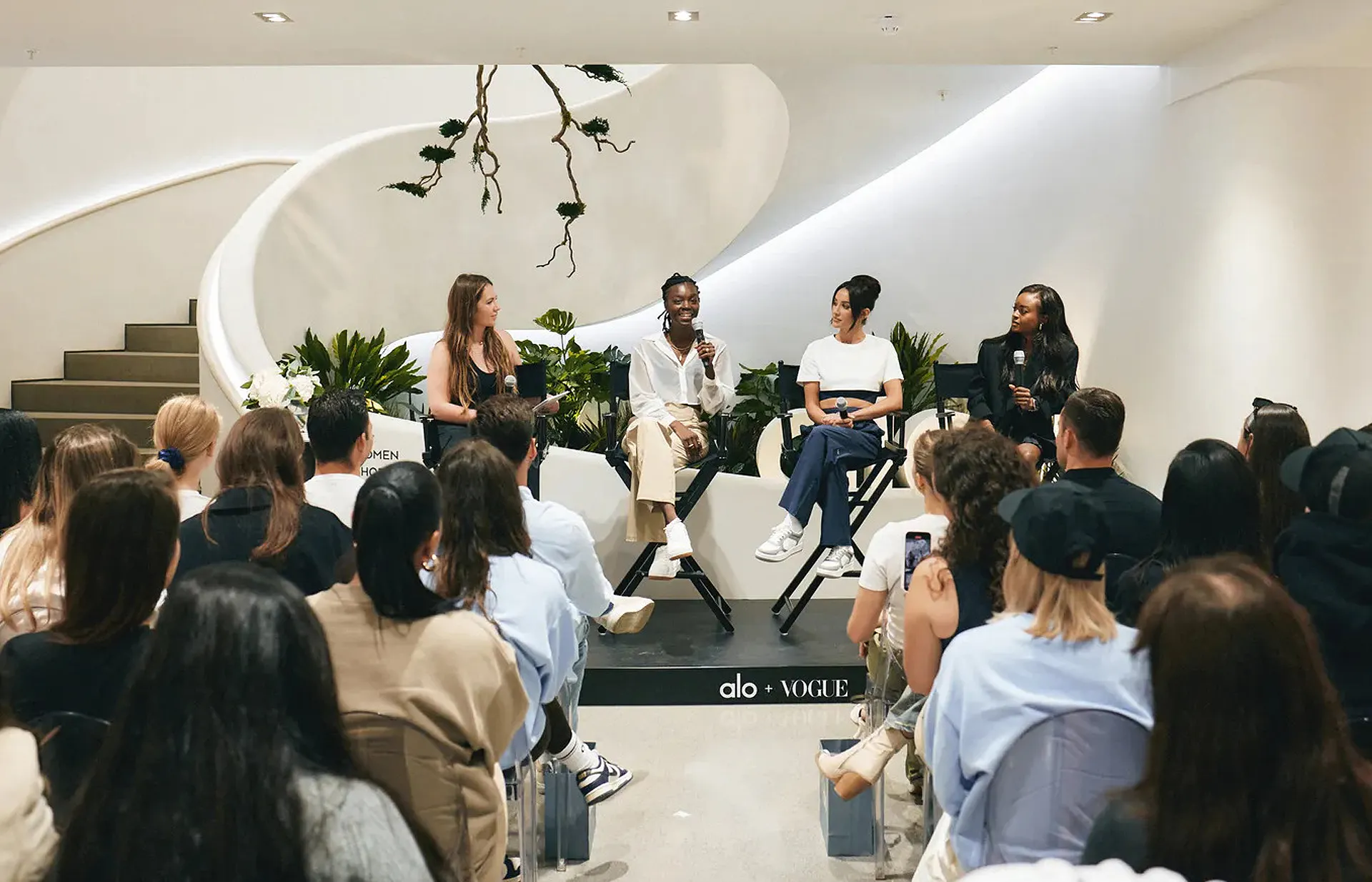
Rather than creating stores focused purely on merchandise, the brand built immersive spaces that reflected an aspirational wellness lifestyle.
Importantly, ALO refers to many of its stores as “sanctuaries” rather than simply retail units, with locations featuring yoga studios, cafés, recovery spaces and community-led activations.
Its strategy extends far beyond retail.
The brand has expanded into skincare, recovery products, luxury fashion collections and wellness experiences, all reinforcing a broader lifestyle ecosystem rather than a single category business.
One of the most important commercial lessons from ALO is that experience itself can become part of the value proposition.
Consumers are not simply purchasing leggings.
They are buying into a feeling.
A version of themselves.
A lifestyle they aspire to belong to.
This creates significantly stronger emotional connection and brand loyalty.
Importantly, this strategy also reduces reliance on price competition.
When businesses create emotional value, consumers become less transactional in their decision-making.
This is why many premium experience-led brands maintain stronger pricing power than competitors operating purely on function or convenience.
Interestingly, analysts increasingly position ALO as one of the strongest challengers to Lululemon, despite entering the market significantly later. Much of this growth has been attributed to the brand’s ability to merge fashion, wellness, hospitality and community into a single ecosystem.
In fact, retail analysts noted that ALO has strategically opened stores near existing Lululemon locations to capture similar premium consumers, with approximately 84% of ALO stores operating within half a mile of a Lululemon location across the United States.
ALO also understands that modern retail experiences are no longer confined to physical spaces.
Every activation is designed to extend digitally.
Beautiful interiors, wellness aesthetics and curated experiences encourage consumers to organically share the brand online. Customers effectively become marketers through social content.
This creates a powerful cycle:
The physical environment becomes both a customer experience tool and a marketing engine.
At a recent Sydney launch, customers queued for hours to enter the store, with the opening featuring yoga performances, wellness drinks, influencer events and community wellness experiences.
ALO’s social ecosystem has become equally powerful. With millions of followers across Instagram and influencer-led campaigns that blur the lines between wellness, fashion and lifestyle, the brand has successfully created aspirational visibility at scale.
For clinics, this is increasingly relevant.
Consumers today often discover businesses through environments and experiences before they evaluate clinical credentials or treatment menus.
The atmosphere, aesthetic, hospitality and emotional tone of a business now influence perception just as strongly as the treatments themselves.
1. Experience creates differentiation
Treatments can often be replicated. Experience is far harder to copy.
2. Community strengthens loyalty
People stay connected to businesses that make them feel part of something bigger.
3. Environment shapes perception
Clients often decide how premium a business feels before treatment even begins.
4. Emotional connection reduces price sensitivity
Consumers are more willing to invest when they feel aligned with a brand’s identity and values.
5. Physical spaces should work harder
Modern businesses must think beyond functionality and consider how environments influence emotion, trust and behaviour.
ALO’s success also reflects a wider cultural movement towards wellness-led consumer behaviour.
People are increasingly prioritising experiences that support how they feel physically, mentally and emotionally.
This is one of the reasons aesthetics clinics are now expanding into:
Consumers no longer separate aesthetics, wellness and lifestyle as rigidly as they once did.
They are seeking businesses that align with the way they want to live.
ALO Yoga demonstrates that modern brands are no longer built purely through products or services.
They are built through experiences.
The businesses leading the next era of growth will be the ones that understand how to create environments, communities and emotional connections that people actively want to return to.
Because increasingly, consumers are not simply buying what a business offers.
They are buying how that business makes them feel.