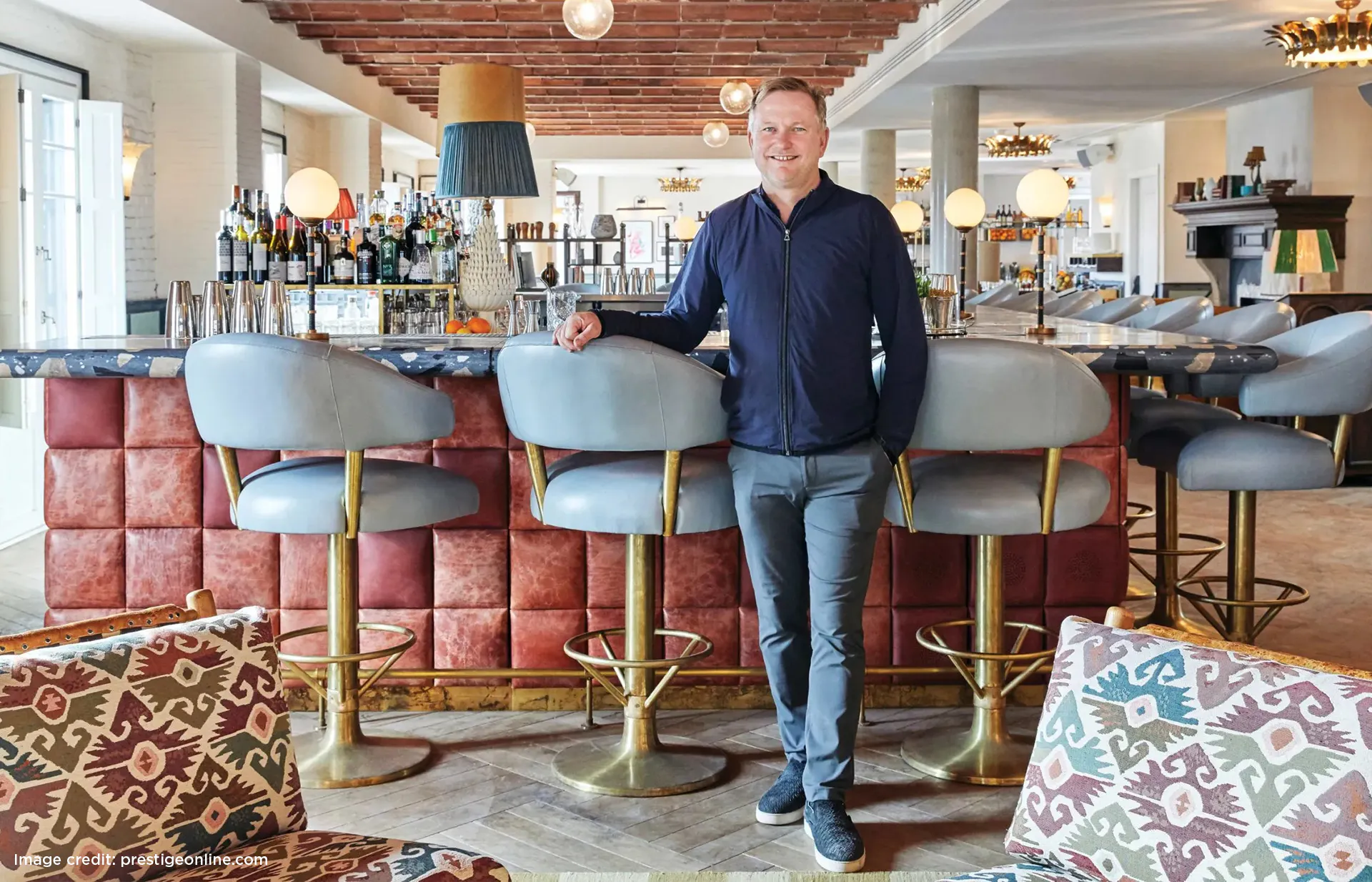
The Hosted Take on what Nick Jones and Soho House can teach us about building a business people want to be part of.
In 1995, Nick Jones opened the first Soho House above his restaurant, Café Boheme, on Greek Street in London, after being offered the floors above the restaurant and recognising an opportunity to create a private space for the writers, artists and creatives who were already gathering in Soho.
It began with around 500 members and a relatively simple proposition: create somewhere that a particular group of people genuinely wanted to spend their time, surrounded by others with similar interests, tastes and outlooks. Thirty years later, Soho House had grown into a global membership business with more than 200,000 Soho House members and over 112,000 people on its membership waiting list at the end of 2024.
The scale of that growth is impressive, but perhaps the more interesting business lesson sits underneath the numbers, because Soho House did not achieve it by inventing an entirely new product or service. It didn’t invent the hotel, restaurant, swimming pool, gym, bar or private members’ club, and almost everything you can physically access inside a Soho House can be found somewhere else.
What it built instead was a world around those things, combining a distinctive environment, a carefully considered experience, a particular type of person in the room and, ultimately, a sense that membership represented something about who you were and where you belonged.
For aesthetic clinic owners operating in an increasingly competitive market, there is a much bigger question hidden within that story: when other clinics can increasingly offer the same treatments, purchase the same technology and access the same information, what are you building around your clinic that gives somebody a reason to choose you?
Aesthetic clinics have traditionally been able to differentiate themselves through what they offer, whether that has been access to a particular practitioner, device, innovative treatment, specific skincare range or expertise that wasn’t readily available elsewhere, but as the market grows and access increases, many of those once-perceived advantages are becoming increasingly difficult to protect.
The same devices can be purchased, the same products can be stocked, other clinics can respond to new trends quickly and, as AI makes sophisticated content and communication increasingly accessible, even the way businesses present themselves is becoming easier to replicate.
None of this makes the treatment itself less important, because clinical outcomes, expertise, safety and quality remain fundamental to a successful clinic, but what the Soho House story encourages us to think about is what makes somebody want to receive that treatment from you rather than somebody else?
If you strip Soho House back to its individual components, there is surprisingly little that is unique. You can sleep in beautiful hotels, eat in exceptional restaurants, work from well-designed spaces, visit excellent gyms and spend an afternoon beside a swimming pool without ever becoming a Soho House member, but what is much harder to access elsewhere is the combination of those things, brought together within an environment with a clear identity and populated by people who, in some way, identify with the same world.
The commercial value, therefore, is not necessarily created by making each individual product impossible to replicate, but by making the overall relationship with the brand increasingly difficult to replace.
For many clinics, the patient journey is still largely organised around appointments, with a patient identifying a concern, booking a consultation or treatment, visiting the clinic, receiving the service, leaving and then returning when they need something again. Even where the clinical experience is excellent, the relationship can remain fundamentally transactional if there is very little connecting the patient to the business beyond the treatment itself.
The opportunity is to look beyond the appointment and understand the wider world your patient is already living in. What does your patient truly care about beyond the immediate treatment they have booked? What stage of life are they navigating, what are they trying to feel more confident about and what questions are they asking that sit outside your current treatment offering?
We hear from clinics within the Hosted community specialising in women approaching midlife who are having much bigger conversations with patients about ageing, hormones, confidence, skin, health and identity, while clinics with patient bases deeply interested in longevity and performance are seeing growing interest in preventative health and the wider choices that support how people want to age.
Neither clinic necessarily needs to respond by adding dozens of new services. The bigger opportunity is to understand the world the patient is already interested in, identify the needs and interests that connect those patients and then decide what meaningful role the clinic could play within that world.
This becomes particularly important when considering memberships and recurring revenue models, because while a membership can be an excellent commercial mechanism, there is an important difference between creating recurring revenue and creating something patients genuinely value being part of.
Charging somebody a monthly fee may change how they pay for their treatments, but it does not automatically change how connected they feel to the business, how much additional value they receive from the relationship or whether they will continue to consider that membership worthwhile over time.
The strongest models therefore begin with a different question: before asking what, you can include in a membership, ask what would make somebody genuinely value being part of it.
That could include education, events, access, personalised guidance, additional services or opportunities to meet people with similar interests, but the important distinction is that the construction begins with how can we create value? Rather than simply what can we include?
This is where the Soho House lesson becomes particularly commercial, because when somebody feels strongly connected to a business, knows the people behind it, trusts its recommendations and identifies with what it represents, the relationship becomes much harder to reduce to an individual transaction.
They have more reasons to return, more reasons to engage between purchases and, perhaps most importantly, fewer reasons to reassess the entire relationship every time a competitor advertises the same treatment for a different price.
The harder your business is to reduce to a treatment and a price, the harder your business becomes to compare.
When a patient’s reason for choosing you extends beyond the individual treatment they are purchasing, the competitive conversation begins to change, because you are no longer relying entirely on having the newest treatment, the lowest price or the most convenient appointment. Instead, you are building value through the totality of the relationship, combining expertise, trust, experience, identity and connection in a way that is considerably harder for a competitor to replicate simply by purchasing the same device.
There is another part of the Soho House story that established clinics can learn from, because as the business expanded it also faced criticism from some members who felt certain Houses had become busier and that some of the intimacy and exclusivity associated with the original experience had been diluted.
A clinic can experience exactly the same challenge on a much smaller scale, because as patient numbers increase, the team expands and the founder becomes less involved in every interaction, the business has to become much more intentional about identifying what made people connect with it in the first place and ensuring those things do not disappear as growth introduces new people, systems and processes.
Does each patient still feel known as your database grows? Does the experience remain consistent when more practitioners join the team? Do the things patients originally valued about the business remain visible when the founder is no longer responsible for delivering every part of the experience?
Building something people want to be part of is one challenge, but knowing what must never be lost as you scale it is another.
We have recently gone through a similar exercise at Hosted as our own team has grown, turning much of the thinking that previously lived with the founders into a clear framework that the wider team can understand, use and protect, so that growth does not inadvertently remove the things that made people connect with Hosted in the first place.
The question for any growing business is the same: what makes your experience distinctly yours, and how do you ensure it survives growth?
Perhaps one of the biggest opportunities for established clinics right now is to stop thinking only about what happens inside the appointment and begin considering the wider world their patients create around it, because the next stage of growth does not necessarily require more treatments, more technology or more complexity.
It requires a deeper understanding of who your patients are, what they care about, what connects them to your business and what you want the clinic to represent in their lives beyond the individual service they purchase.
Treatments will continue to change, new technology will continue to arrive, competitors will continue to invest in many of the same devices and AI will make it increasingly easy for businesses to replicate ideas, content and marketing strategies, but the relationships you build, the experiences you create and the feeling somebody associates with being part of your business are considerably harder to reproduce.
Nick Jones did not build Soho House by inventing hotels, restaurants or members’ clubs. He understood a particular group of people, created somewhere they wanted to spend their time and then continued building around how they wanted to live, work and connect.
The Hosted takeaway? Your next stage of growth may not come from finding another treatment your competitors don’t have. It may come from understanding your patients deeply enough to build a business around them that they would genuinely miss if it disappeared.