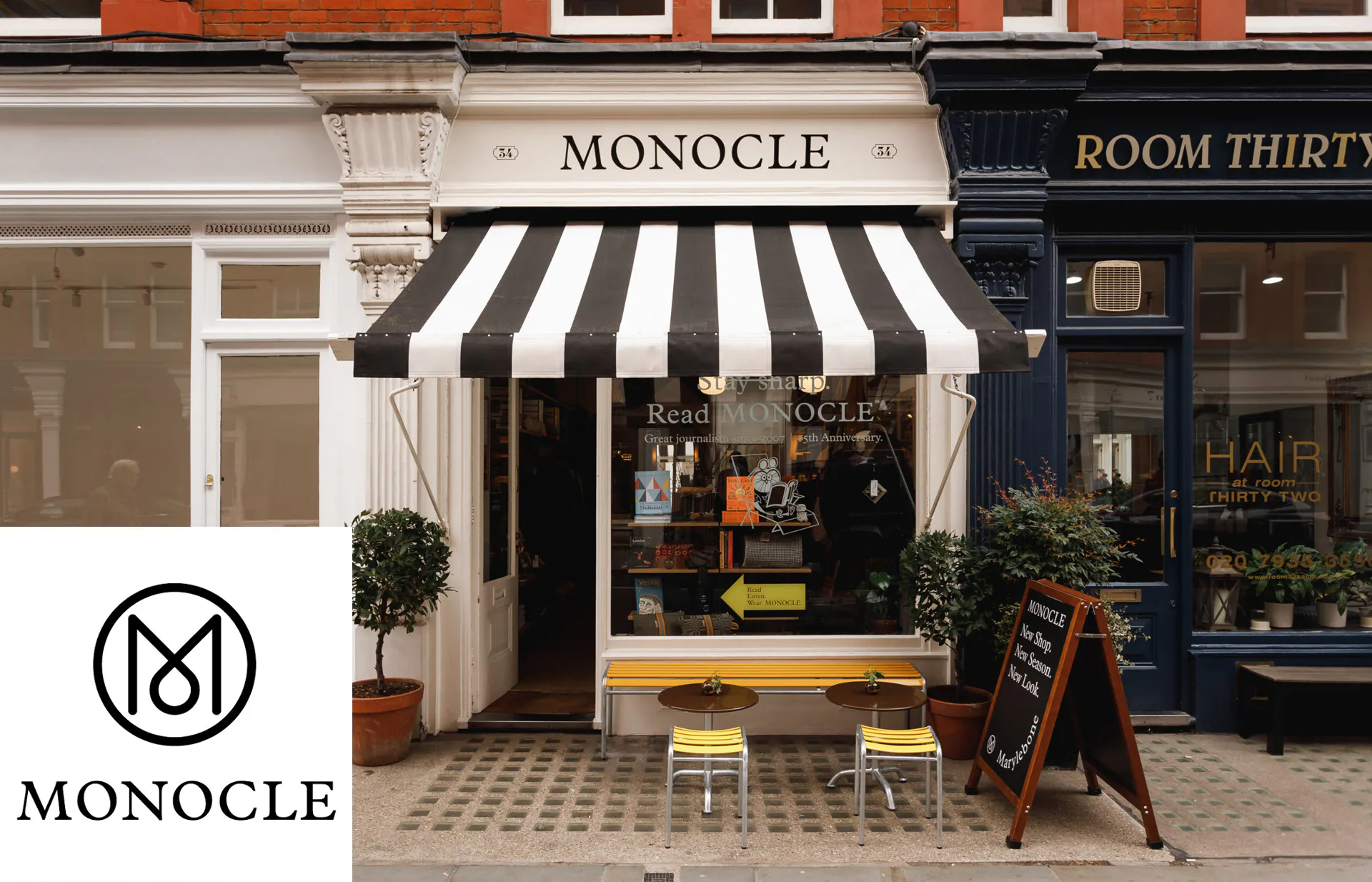
The Hosted Take: Monocle
When we think about business growth, we often think about doing more, whether that's attracting more customers, introducing new products, expanding our services or identifying additional opportunities to generate revenue. Yet some of the most interesting examples of business growth come from companies that have recognised the wider commercial value of something they have already created and found ways to develop it beyond its original purpose.
Monocle is one of those businesses.
Founded by Tyler Brûlé in 2007, Monocle began as an independent magazine covering global affairs, business, design, culture and travel, establishing a distinctive editorial perspective at a time when the publishing industry was undergoing significant change. Almost two decades later, the company has developed into a much broader business, with activities spanning radio, podcasts, books, retail, cafés, events and commercial partnerships, all connected by the expertise, reputation and identity established through its original publication.
What makes Monocle particularly interesting is that these ventures are more than additional products sitting alongside a successful magazine. They represent different commercial opportunities developed from a common foundation, allowing the business to operate across several categories while maintaining a recognisable identity and perspective.
For established clinic owners, there is an important lesson in this approach, particularly when considering the assets you have already developed within your business and whether their commercial value could extend beyond the treatments and services you currently provide.
Monocle launched during a period when digital media was changing how people consumed information and traditional publishers were facing increasing pressure to adapt their business models. Rather than abandoning print or competing for the largest possible online audience, Monocle invested in high-quality journalism, distinctive design and a carefully considered editorial perspective, creating a publication with a clear identity and a recognisable position within the market.
As the business developed, it began exploring opportunities to apply that identity and expertise in different ways, introducing radio programming that extended its journalism into audio, publishing books and travel guides that turned editorial knowledge into standalone products, and developing retail spaces where customers could purchase carefully selected products and collaborations.
Its cafés introduced another commercial activity, bringing elements of the brand into hospitality, while its events created opportunities to bring together people and organisations around the subjects and interests Monocle had spent years covering.
Although these ventures operate in different industries and require different capabilities, they share an important connection: each has been developed from something the business already understood, whether that was its editorial expertise, industry relationships, reputation or ability to identify products and experiences that aligned with its established perspective.
The result is a business ecosystem in which the original magazine remains an important part of the company, but no longer represents its only way of generating revenue or creating commercial opportunities.
For clinic owners, this raises an interesting question about the difference between growing an existing service business and recognising that the capabilities developed within that business may have value in other areas.
One of the most valuable lessons from Monocle is that the assets within a business are not always limited to the products or services that appear on its price list, and that some of the most commercially interesting opportunities can emerge from expertise, relationships, processes and intellectual property developed over many years.
Through publishing, Monocle established editorial knowledge, credibility, a distinctive identity and relationships across multiple industries, creating assets that could be applied to new commercial activities without requiring the company to establish its reputation from the beginning each time.
For established clinic owners, the same principle is worth exploring because, over several years of running a successful clinic, you will almost certainly have developed valuable capabilities that extend beyond your clinical expertise.
You may have created a particularly effective consultation process, developed an approach to patient management that consistently delivers strong results, established specialist knowledge within a particular treatment area or built operational systems that allow your business to run efficiently. You may also have invested significant time in training your team, developing internal standards and learning how to manage the commercial challenges that come with running a growing clinic.
While these capabilities may have been developed to improve the performance of your existing business, some could also have commercial value beyond it.
A clinic with a well-established approach to patient experience might identify opportunities to support other businesses through training or consultancy, while a practitioner with recognised specialist expertise could potentially develop professional education that allows their knowledge to reach a wider audience. Equally, a clinic that has developed effective operational processes may have knowledge that could support other business owners facing similar challenges.
Of course, identifying an opportunity doesn't automatically mean it should become a new business, but it does encourage a different way of thinking about what you have built and where future commercial value might exist.
For an established clinic looking to grow, the answer isn’t always to introduce more treatments, launch new products or add another service. At some point, you can reach a ceiling where growth simply means doing more of the same.
Monocle gives us a clear reminder to look already built: your expertise, proven systems, reputation and relationships. How could you use these existing assets to create new revenue streams, reach new audiences or build a business that grows beyond the limits of your current model?
There is another important part of the Monocle story that deserves attention, particularly for business owners who are considering expanding beyond their original services.
Although its different ventures share a recognisable identity, each represents a separate commercial activity with its own operational requirements, financial considerations and opportunities for growth. Moving into retail, hospitality or events requires different skills and resources from producing a magazine, which means the success of the original business cannot automatically guarantee the success of everything that follows.
In interviews about Monocle's development, Brûlé has discussed the importance of ensuring that new ventures have a credible commercial purpose, rather than introducing additional activities simply because they appear to be a natural extension of the brand.
This distinction is particularly relevant within aesthetics, where successful clinic owners can find themselves presented with a growing number of opportunities as their reputation and experience develop.
Launching a training academy, introducing a product range, opening another clinic or developing a consultancy business may all appear to offer opportunities for additional revenue, but each requires investment, management attention and a clear understanding of how the new activity will become commercially viable.
For example, a training academy may allow you to generate income from your clinical expertise, but it also requires you to develop an educational product, attract paying delegates, manage administration and ensure that the quality of delivery remains consistent. Similarly, opening another clinic may create opportunities for revenue growth, but it also introduces additional staffing, operational and financial responsibilities that could affect the performance of your existing business.
This is where the distinction between diversification and distraction becomes important, because while a new venture may generate additional revenue, it may not necessarily increase the profitability, resilience or overall value of your business.
Before committing to an opportunity, it is worth considering whether it builds on an existing strength, whether there is sufficient demand, what resources will be required and how the new venture will operate alongside the business you already have.
The objective should be to develop a stronger business, rather than simply a larger or more complicated one.
For many established clinic owners, one of the most significant limitations to growth is the relationship between their personal time and the revenue their business generates.
You may have developed an excellent reputation, established a loyal patient base and created strong demand for your expertise, but if a significant proportion of your revenue still depends on the appointments you personally deliver, there is a natural limit to how far the business can grow without changing the way that value is created.
This is where recognising the commercial potential of your existing knowledge and capabilities shines, because expertise that has traditionally been delivered through your own time may also have value when transferred into a process, a training programme, a team or another commercial offering. The important consideration is whether the value can exist independently of the founder, rather than simply creating another activity that requires their constant involvement.
For example, developing a professional education programme might appear to offer a way of generating revenue beyond patient appointments, but if the programme relies entirely on you delivering every session, it may simply replace one form of time-dependent income with another.
However, if that expertise can be developed into a structured educational product, supported by appropriate systems and delivered through a wider team, the opportunity begins to look commercially different.
This principle can also be applied within the clinic itself, where transferring knowledge, establishing consistent standards and developing the capabilities of your team can allow the business to generate value without every decision or appointment depending on the owner.
Monocle's expansion provides an interesting example of how a company can develop commercial activities around the expertise and reputation it has established, while recognising that each activity requires the people, systems and resources needed to operate effectively.
At the heart of the success of Monocle is that developing additional revenue streams should be a deliberate strategic decision, guided by a clear understanding of the business you ultimately want to build.
There is no requirement for every successful clinic to develop multiple businesses, and diversification should never become a measure of success in its own right, particularly when the core business may still have significant opportunities to improve its profitability, operational efficiency or market position.
However, for owners who have reached a stage where their clinic is established, their expertise is recognised and their operational foundations are strong, there may be value in considering whether the assets they have developed could support additional commercial opportunities.
This requires looking at the business from a different perspective, moving beyond the treatments you offer and considering the knowledge, intellectual property, systems, reputation and capabilities that have been created along the way.
It also requires being selective, because the commercial value of a new opportunity should be assessed not only by the revenue it could generate, but by the investment it requires, the profitability it could deliver and the impact it may have on the existing business.
Monocle demonstrates how one original business can provide the foundation for several interconnected commercial activities, but the lesson for clinic owners is not necessarily to replicate its model. It is to recognise that the business you have spent years building may contain valuable assets that have yet to be fully explored, and that understanding their potential could influence the decisions you make about your next stage of growth.
What have you built within your clinic that could become a valuable business in its own right, and would developing that opportunity make your overall business stronger?