Innovation in Focus: How the post-summer consultation could be the starting point for a longer conversation about skin quality, resilience and treatment planning.
Summer may be over, but for many patients, its effects on the skin are only becoming more visible. Pigmentation appears more pronounced. Texture may feel different. Elasticity and firmness can seem reduced and the cumulative effects of UV exposure are often more apparent once the immediate glow of summer has faded.
For clinics, autumn therefore presents an interesting clinical moment, one that is - increasingly with the rise of regenerative aesthetics - weighting commercially. Historically, the big question was: What needs correcting? Now conversations have firmly shifted towards: What does this skin need for the future?
That shift, from correction towards ongoing skin quality, is helping to shape what could be described as the emerging skin health economy: a more considered approach to aesthetic treatment built around maintaining, improving and monitoring skin quality over time.
It is a conversation that brings together changing patient expectations, advances in regenerative and resurfacing technologies and a growing appetite for treatment plans that feel less like a one-off intervention and more like an ongoing investment in the skin. Let ‘s look at what we’re seeing unfold...
Traditionally, the post-summer consultation begins with a familiar list of concerns we all anticipate: Pigmentation, Fine lines, Texture, Dullness and occasionally Loss of firmness and with good reason, but it’s time to zoom out to zoom in.
UV exposure is a major contributor to photoageing, with research showing that ultraviolet radiation can contribute to oxidative stress, collagen degradation and changes within the skin's extracellular matrix. At the same time, intrinsic ageing means that the skin's ability to maintain its structural framework changes over time. Collagen density has been observed to decline progressively throughout adulthood, with one frequently cited study estimating an average reduction of around 1% per year.
That makes the post-summer consultation an opportunity to zoom out. Rather than looking only at what has happened to the skin over the past few months, practitioners can consider what is happening to its quality more broadly and how that might inform a longer-term treatment strategy. The question becomes less about repairing one visible issue and more about understanding the skin you have today and planning for the skin you want to maintain tomorrow.
The aesthetic patient is also becoming more considered in what they want from treatment. For many, the objective is no longer necessarily dramatic transformation. There is increasing interest in results that look natural, progressive and proportionate, improving the quality and appearance of the skin without necessarily creating an obvious change. That might mean addressing texture alongside pigmentation. Perhaps it’s supporting firmness while improving overall skin quality. It is not about replacing corrective treatments, it is about placing them within a bigger picture.
The skin-health conversation starts before you recommend a treatment. Instead of beginning with “What would you like to treat?”, consider asking questions that uncover the patient's longer-term objectives. What are you noticing about your skin at the moment? These questions can reveal something that a treatment-led consultation might miss.
Equally, if you want patients to understand this shift, you and your team needs to talk about it consistently. Consider reviewing the language used across your website, consultation forms, treatment menus and social content and moving beyond language that focuses exclusively on “fixing” or “removing” and introducing “skin health”, “skin quality.
The term regenerative is increasingly used across aesthetic medicine, although it encompasses a broad range of technologies and approaches rather than one defined treatment category.
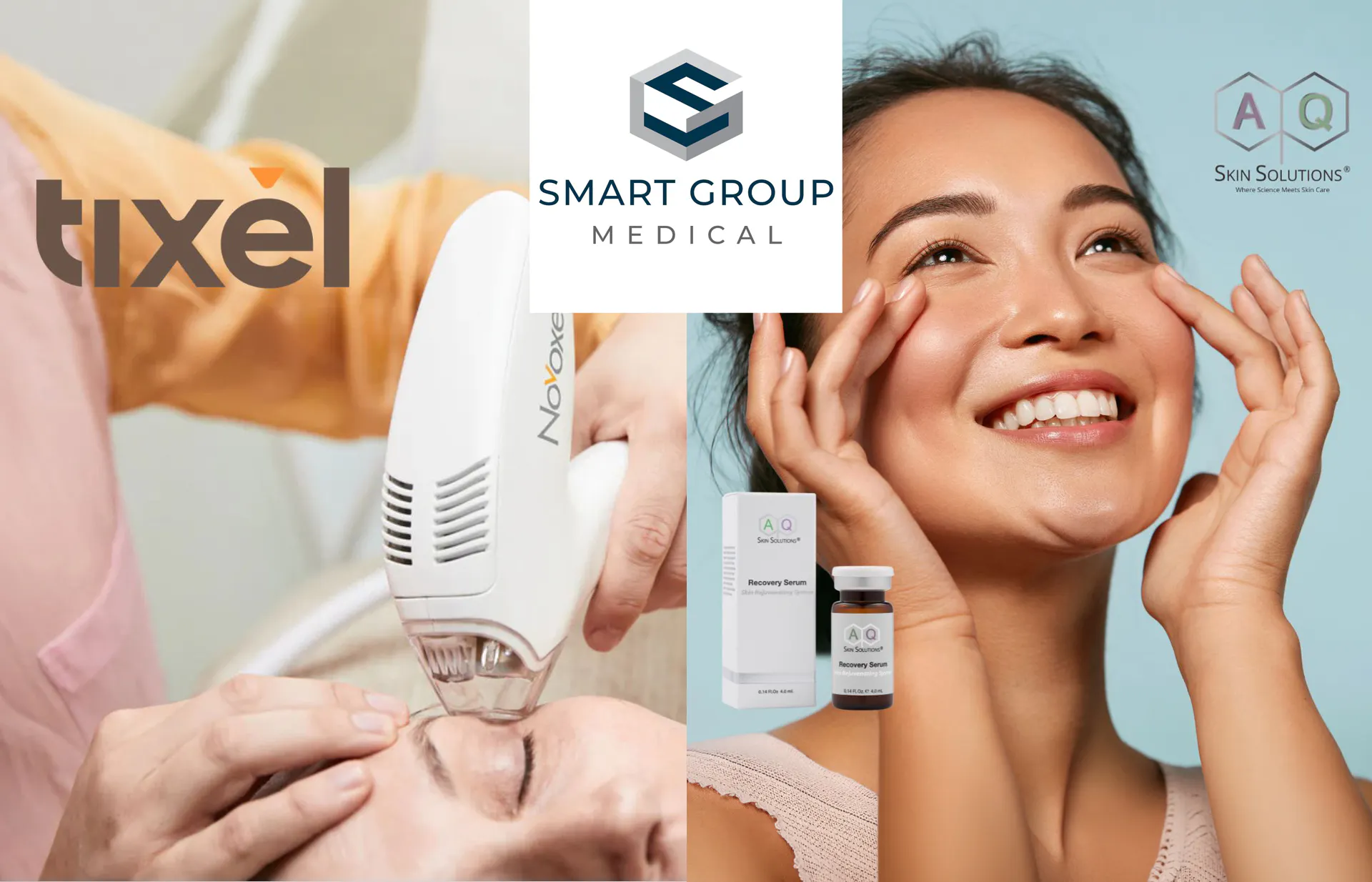
One example is Tixel®, which uses thermo-mechanical fractional injury to create controlled thermal effects within the skin. Clinical research has explored its use for facial rejuvenation, including improvements in parameters such as complexion, wrinkles, vitality and laxity.
More recent research continues to investigate thermo-mechanical fractional injury for skin rejuvenation, including objective improvements in measures such as roughness, wrinkles, pore size, elasticity and pigmentation, although the evidence base remains developing and larger controlled studies are still needed.
Alongside technologies such as Tixel®, regenerative skincare incorporating growth factors, including products such as AQ Skin Solutions® is another area attracting interest. Growth factors are naturally occurring signalling proteins involved in processes including cell communication and wound healing. AQ Skin Solutions describes its products as using human fibroblast-derived growth factor technology and publishes research relating to growth-factor applications in skin rejuvenation and wound healing.
When we look at products offering clinically-validation skin regeneration, instead of selling a treatment, the opportunity broadens to developing a skin health strategy. A skin-health approach encourages practitioners to consider how different modalities might work together, which indications need to be addressed first, what the patient's skin can tolerate and what the longer-term objective actually is.
The skin health economy therefore creates an opportunity to rethink how clinics talk about technology and skincare. Patients don't necessarily need to understand every product, device or active ingredient available to them, they need to understand why something has been recommended for their skin. Think, instead of: “This treatment is great for pigmentation. To “Your priority is improving uneven pigmentation while maintaining the overall quality of your skin, so this is where we would start, and here's what we would consider next.”
A clinic built around correction can easily become transactional a patient presents with pigmentation and it is treated. They return with another concern, which is then treated once more. The conversation can become a sequence of individual problems, each requiring its own solution.
A skin-health approach creates the possibility of something different: a treatment journey that evolves. The patient might begin with a post-summer assessment and their practitioner establishes the priorities for their skin, identifies the areas that could benefit from intervention and develops a phased programme.
This inevitably creates a much more continuous relationship between patient and practitioner. Importantly, it gives the clinic a reason to stay in conversation with the patient beyond the point at which their original concern has been addressed.
The commercial opportunity is therefore not simply more treatments. It is a different model of patient value: one built around expertise, planning, progression and continuity. Perhaps the biggest opportunity is to stop thinking of autumn as a seasonal campaign and start thinking of it as the beginning of a longer patient journey. Autumn can be the assessment, Winter can be the period for treatment and skin renewal, where appropriate. Spring can become a point to review progress and adapt the plan. Summer can then shift the focus towards protection and maintenance. The exact journey will differ by patient and treatment, but the principle remains the same.
If the industry is moving towards skin quality rather than purely visible correction, the ability to measure that quality becomes increasingly relevant. Objective skin-analysis technologies are one example of how by leveraging objective measures, the treatment journey is strengthened both commercially and clinically.
DermaLab Aesthetic, for example, measures parameters including collagen, hydration, elasticity, pH balance and oil production, giving practitioners data that can be used alongside clinical assessment. Therefore, practitioners can introduce another layer of information into the conversation.
If the conversation is moving towards skin quality, clinics should consider how they demonstrate progress. Before and After Photography of course always remains useful, but when discussing the finite incremental progress of quality, objective measurement provides an opportunity to show patients that progress is not always about a dramatic visual transformation. When the goal is long-term skin health, being able to track those changes can make the journey more tangible.
We’re seeing first-hand how the value of aesthetic medicine increasingly sits in the journey, rather than the individual treatment. For patients, that could mean moving away from a cycle of chasing the next visible concern and towards a more considered approach to maintaining skin quality. For practitioners, it creates opportunities to build protocols around the individual, with the right researched-backed brands.