Great leadership isn't about winning every point; it's about understanding which moments deserve your energy, recovering from the ones that don't go your way and never losing sight of the bigger game you're trying to win.
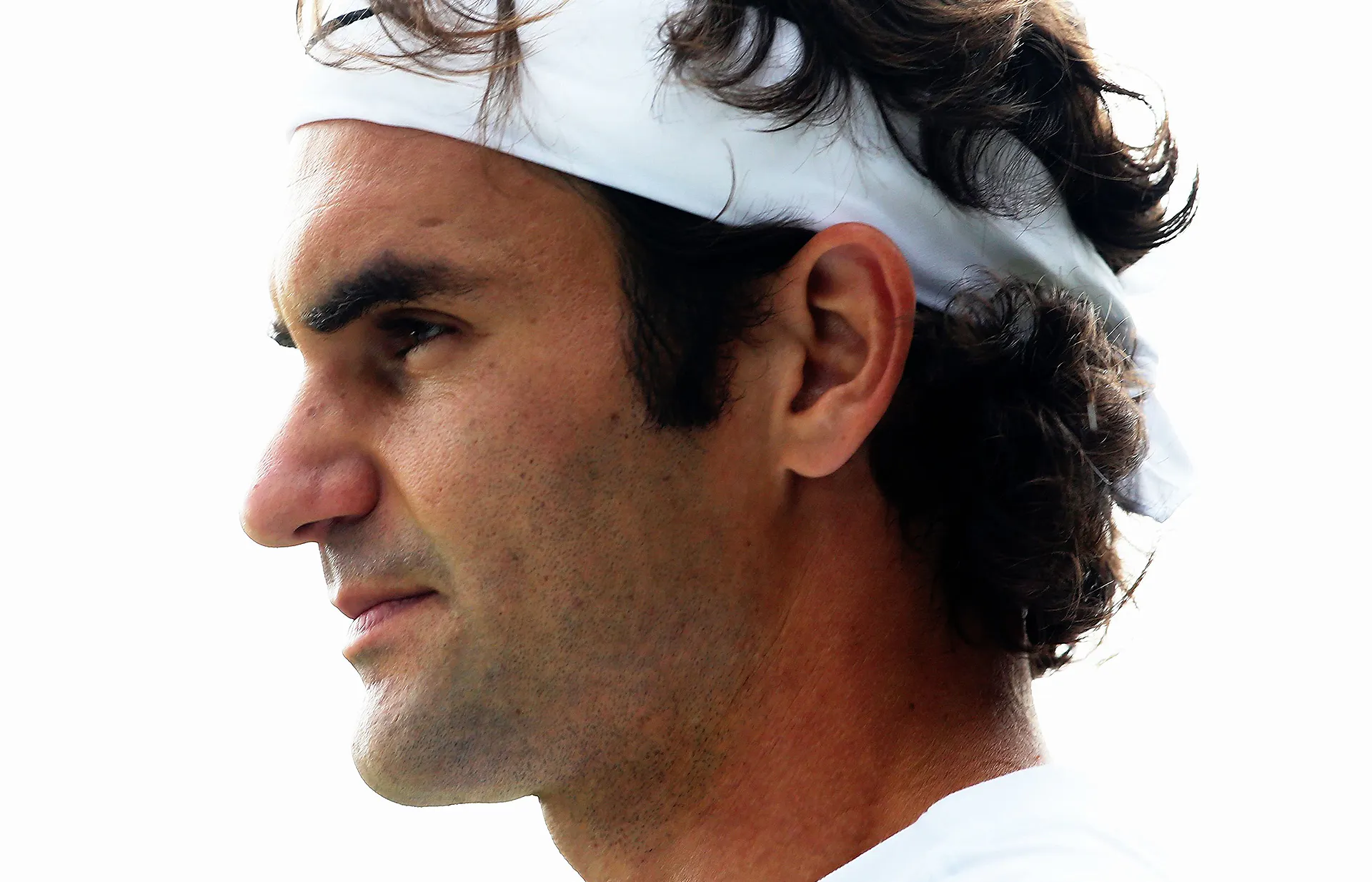
Roger Federer made a career out of making extraordinarily difficult things look almost effortless, but behind the composure, precision and natural talent was something perhaps even more relevant to anyone leading a business: an exceptional ability to deal with losing, reset quickly and focus his attention on the moment that came next.
During his 2024 commencement address at Dartmouth College, Federer shared a statistic from his career that puts his extraordinary success into a very different perspective. Across more than 1,500 singles matches, he won almost 80% of them, yet when he looked at the individual points he had played throughout his career, he had won just 54%.
One of the greatest tennis players of all time, therefore, lost almost half of the individual points he played.
Federer's lesson was that when you're playing a point, it has to be the most important thing in the world, but once it is over, whether you've hit an incredible winner or made a terrible mistake, you have to leave it behind and give your full attention to what comes next.
For business owners, particularly those leading established businesses where the decisions are becoming bigger and the stakes increasingly feel higher, there is a powerful leadership lesson within that.
As your business grows, there will inevitably be decisions that don't work out in the way you expected, people you hire who turn out not to be right, investments that take longer to deliver a return, opportunities you miss, difficult months financially and periods where the business simply doesn't perform in the way you had planned.
When you have built the business yourself and care deeply about its success, it can be incredibly difficult to experience those moments objectively, because every setback can feel like a reflection of your judgement and every decision can feel as though it carries enormous consequences.
But the Federer statistic gives us a different way of looking at performance.
You can lose a significant number of individual points and still be winning the match.
The leadership skill is being able to recognise the difference between something that requires reflection and action, and something that has already happened, taught you what it needed to teach you and now needs to be left behind.
Because one disappointing month can easily become six months of overly cautious decision-making, one poor hire can make you reluctant to recruit the person the business genuinely needs, and one unsuccessful investment can make you hesitant when the right opportunity eventually presents itself.
Resilience isn't simply your ability to withstand difficult moments; it is your ability to prevent one difficult moment from unnecessarily influencing all of the decisions that follow it.
There is an equally important second half to this idea, because knowing how to move on doesn't mean becoming indifferent to what is happening around you.
Federer's philosophy was that while the point is being played, it deserves your complete attention, and only once it has finished should you leave it behind and reset for the next one.
Leadership requires a similar ability to recognise the moments that genuinely matter while they are happening.
A brilliant employee telling you they're unhappy, cash flow gradually becoming tighter, patient retention beginning to decline, an opportunity to acquire or expand, a cultural issue appearing within the team or a difficult conversation you've repeatedly postponed might initially look like one of hundreds of things competing for your attention.
But some of those moments have the potential to materially change what happens next.
The difficulty for established clinic owners is that there is usually a lot happening at once, and when you're immersed in patients, people, finances, operations, marketing and the constant decisions involved in running the business, everything can begin to feel equally urgent.
One of the increasingly important skills of leadership is therefore judgement: knowing which point you're playing and recognising when this particular point deserves everything you've got.
Federer's career also challenges the way we sometimes think about resilience.
In 2016, after struggling with a knee injury, he stepped away from competition for six months and eventually returned at 35 years old, ranked 17th in the world, at a point when there were legitimate questions about whether he would ever compete at the very highest level again.
His first Grand Slam tournament back was the 2017 Australian Open, which he won after coming from a break down against Rafael Nadal in the deciding fifth set of the final; he went on to win Wimbledon later that year and finished the season ranked number two in the world.
What makes that period interesting from a leadership perspective isn't simply the familiar story of somebody refusing to give up, because resilience at that level required something more sophisticated than endurance.
Federer continued to adapt his game, developing different ways to compete so that success wasn't dependent on everything working exactly as it had earlier in his career.
There is an important distinction here for business owners.
We often associate resilience with continuing to push forward, working harder and refusing to quit, when sometimes the most resilient decision available to a leader is to stop, reassess and change the way they're playing the game.
What worked when you had three employees might not work when you have ten; the marketing strategy that built your first £500,000 of revenue might not create the next £500,000; the level of founder involvement that established an exceptional patient experience might eventually prevent your team from taking genuine ownership of it.
Resilience isn't an obligation to keep doing the same thing for longer.
Sometimes it is having enough perspective to recognise that the game has changed and being willing to change with it.
This becomes particularly important during difficult periods because founders rarely experience setbacks purely as business events; when you've spent years building something, your identity, reputation, finances, relationships and ambitions can become deeply intertwined with how the company is performing.
A difficult quarter can therefore start to feel like a failing business, just as one poor decision can begin to feel like evidence that your judgement is wrong.
But that is the equivalent of judging Federer's career by one lost point, one lost set or even one lost final.
The 54% statistic reminds us that high performance is rarely a clean sequence of victories; it is the cumulative result of thousands of moments, decisions, mistakes, adjustments and recoveries that eventually add up to something much bigger.
The question for a leader isn't therefore whether something has gone wrong.
Something eventually will.
The more useful question is:
What does this moment require from me?
Think about the last six months of your business and consider it through three different lenses.
The point you're playing: What is happening within your business right now that genuinely deserves your full attention, and is there a conversation, decision or emerging problem that could materially influence where the business goes next if you address it now?
The point you need to leave behind: What has already happened that you're still allowing to influence the decisions you're making today, and what might change if you treated that experience as useful information rather than something you need to carry forward?
The match you're trying to win: What are you ultimately building towards, and when you look beyond this week's problems, this month's numbers and the immediate demands on your time, are the decisions you're making actually moving the business closer to that destination?
That final question may be the most important because the clearer you are about the match you're trying to win, the easier it becomes to understand which individual points really matter.
Leadership can create an unrealistic expectation that as you become more experienced, you should make fewer mistakes, have more answers and somehow become capable of getting every important decision right.
Federer's career provides a useful reminder that even extraordinary performance doesn't look like that.
One of the greatest tennis players in history lost almost as many individual points as he won, but those points didn't all carry equal weight, nor did losing one determine how he approached the next.
For leaders, perhaps resilience works in much the same way: give the moments that matter your full attention, learn from the ones that don't go your way, adapt when the game changes and develop the discipline to move on when a point has already been played.
Because ultimately, your job as a leader isn't to win every point in your business.
It's to understand the match you're trying to win.